AI Visual Inspection for Defect Detection in Manufacturing
acty.dev's AI visual inspection capability watches production-line cameras for defects, missing components, misalignment, or packaging faults, turning a manual line check into a real-time, camera-based inspection signal.
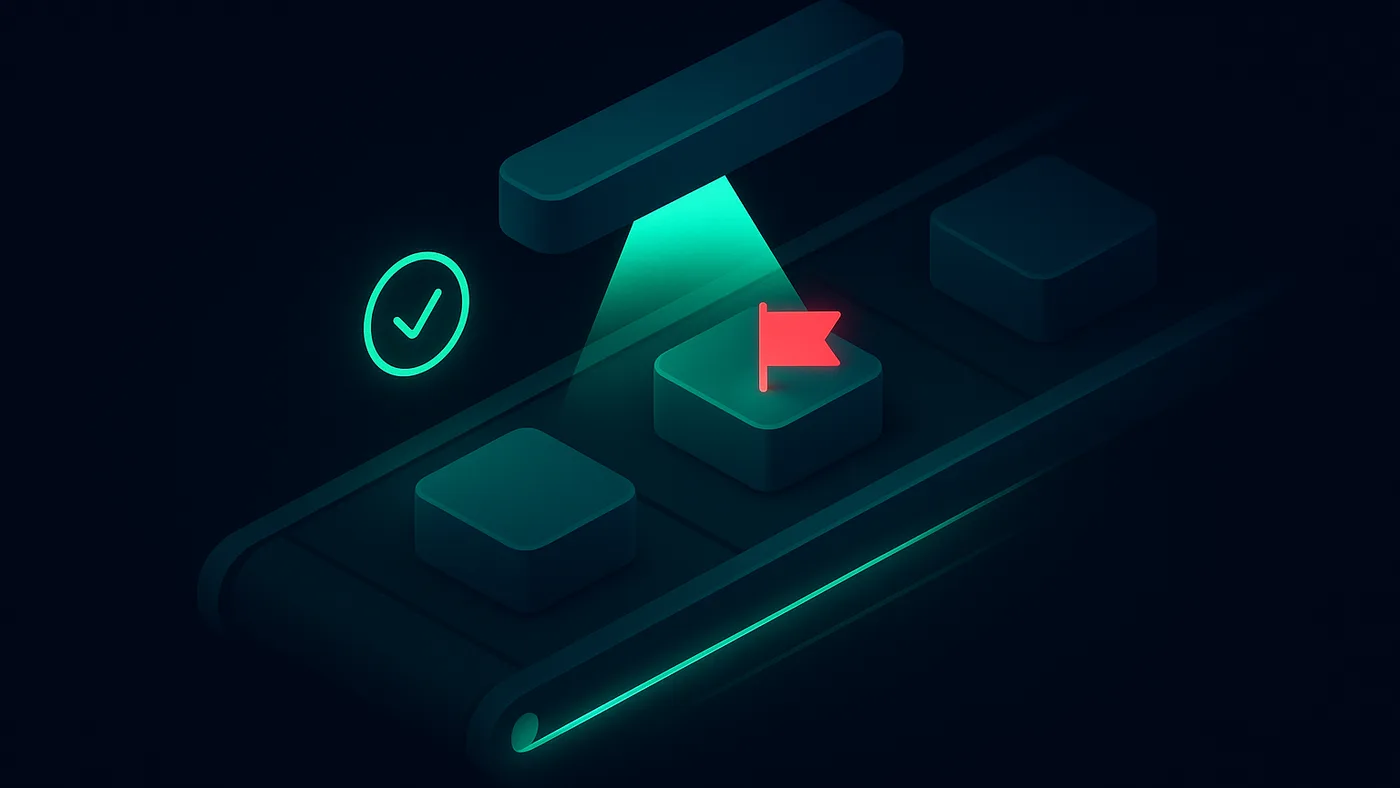
AI visual inspection watches specific points on the line: a dedicated inspection station after machining, the layout zone before a checkweigher, and the point where units are counted into a shipping carton. At each point, the camera looks for a defined defect, fault, or count mismatch rather than “anything unusual,” and sends a concrete event the moment one is confirmed.
Where it applies on the floor
Metal surface defects at a dedicated station. After cutting or forming, machined parts move through a dedicated inspection station under controlled lighting. A scratch, cut, or stamped imprint on the metal surface breaks the pattern the camera is trained to expect. The system localizes the defect, matches it against the flaw types agreed for that part, and sends the event straight to the line’s MES. A defective part is diverted before it reaches packing.
Slice geometry and pack contents before the checkweigher. On a line where sliced product moves from a slicer across a conveyor to a layout zone before reaching a checkweigher and flow-pack machine, a slice can land with an overlap or a fold, or a pack with a slice missing or doubled can head for the checkweigher. The system verifies slice geometry and pack contents as they move, and can send a signal to the line controller to reject or briefly pause that specific pack. Fewer whole packs get discarded further down the line, and less film and product go to waste.
Case count verified before the carton closes. As packed units accumulate and are counted into a shipping carton against a fixed standard for that case, the system watches the count reaching the carton in real time. If the number doesn’t match the standard, it flags the mismatch and names the exact station before the carton is sealed shut. A shortfall is caught at the carton, not discovered later by the customer receiving it.
Glare, dust, and image artifacts. Any inspection station has to deal with lighting glare, dust, and image artifacts that can look like a defect to a single detection method. When one method flags something that turns out to be a reflection or a speck of dust rather than the part itself, that’s exactly the failure mode the pilot is built to catch. Detection methods get combined and filtered by a minimum defect size so an isolated artifact is screened out rather than triggering a flag on its own.
The problem we solve
Manual visual inspection on a production line is slow, inconsistent between shifts, and hard to scale as volume grows. Common defects, missing components, misalignment, and packaging faults still slip through, and there is rarely a consistent record of what was checked or missed.
How we work
- Pilot scoping.Before any build starts, we settle on the defect, fault, or condition types that matter for your line, plus the reference set of parts used to validate them.
- Pilot on your footage.At the point on the line where inspection happens, the pilot uses footage captured there, checks it against that reference set, and follows the shared acceptance process set out on the AI video analytics page.
- Integration.Confirmed detections are connected into your existing line or quality process in the format your team already uses: dashboards, alerts, or notification channels, or a controller signal to divert, reject, or pause a pack, with the integration confirmed before rollout.
- Rollout and support.We move from a confirmed pilot to full-line rollout with documentation and edge-case notes, and offer ongoing support or tuning as products, lines, or lighting conditions change.
What you bring / what you get
Inputs
- Camera access or existing CCTV footage on the relevant production line or station
- Example images or footage of the defects, faults, or conditions to catch
- The manual inspection steps and decisions they currently require
Outputs
- A piloted visual inspection capability, validated against agreed acceptance thresholds, for the agreed defect or fault types
- A flagged-defect output annotated with edge-case notes from the pilot
- Documentation and a handoff or deployment checklist
Definition of done.A visual inspection pilot confirmed against your line's own defect or fault set and control sample, meeting the acceptance thresholds agreed for the pilot, with confirmed detections wired into your line's MES or a controller signal, and documentation handed over for full-line rollout.
Fit and anti-fit
Good fit
- Production lines with existing or plannable camera coverage
- Teams that need a specific, defined set of defects or faults caught
- Buyers who want defect detection working on their own parts and stations, not just advice
Not a fit
- Inspection points with no camera in place and nothing planned to add one
- Idea-only requests with no defined defect type or line
- Budgets too small to scope a single defect type or station properly
Questions
- What does AI visual inspection from acty.dev include?
- A detection model tuned on your own station footage for the agreed defect set, the event wiring into your line (MES or controller), and the pilot's edge-case notes with handover documentation.
- What kinds of defects and faults does it catch on a line like mine?
- Common classes include surface defects such as scratches, cuts, or stamped imprints on machined parts, geometry or placement faults such as a slice landing with the wrong overlap, and count mismatches such as a carton closing with too few units. The exact set is defined during your task review, matched to what your cameras can actually see.
- Once a defect is confirmed, what does the line actually do?
- An event goes straight to your line's MES, or a controller signal diverts, rejects, or pauses the affected part. Uncertain or low-confidence flags can be routed to a person for a decision instead of triggering that action automatically.
- Can it tell products apart if we run more than one line or product on the same station?
- Yes. The system is matched against the set of products and defect types agreed for that station, and adaptation to a new product or surface is confirmed during the pilot rather than assumed.
- How is this priced?
- A single-station inspection task with a defined defect set can start from a few hundred dollars. Coverage across more lines or stations, plus ongoing monitoring, gets scoped after a task review.
Explore
Have a process, dataset, or camera footage to work from?