AI Safety Monitoring System for Manufacturing
acty.dev designs AI safety monitoring systems that watch for PPE compliance and unsafe zone or behavior events on your own camera footage, piloted against agreed acceptance thresholds before a full rollout across a site.
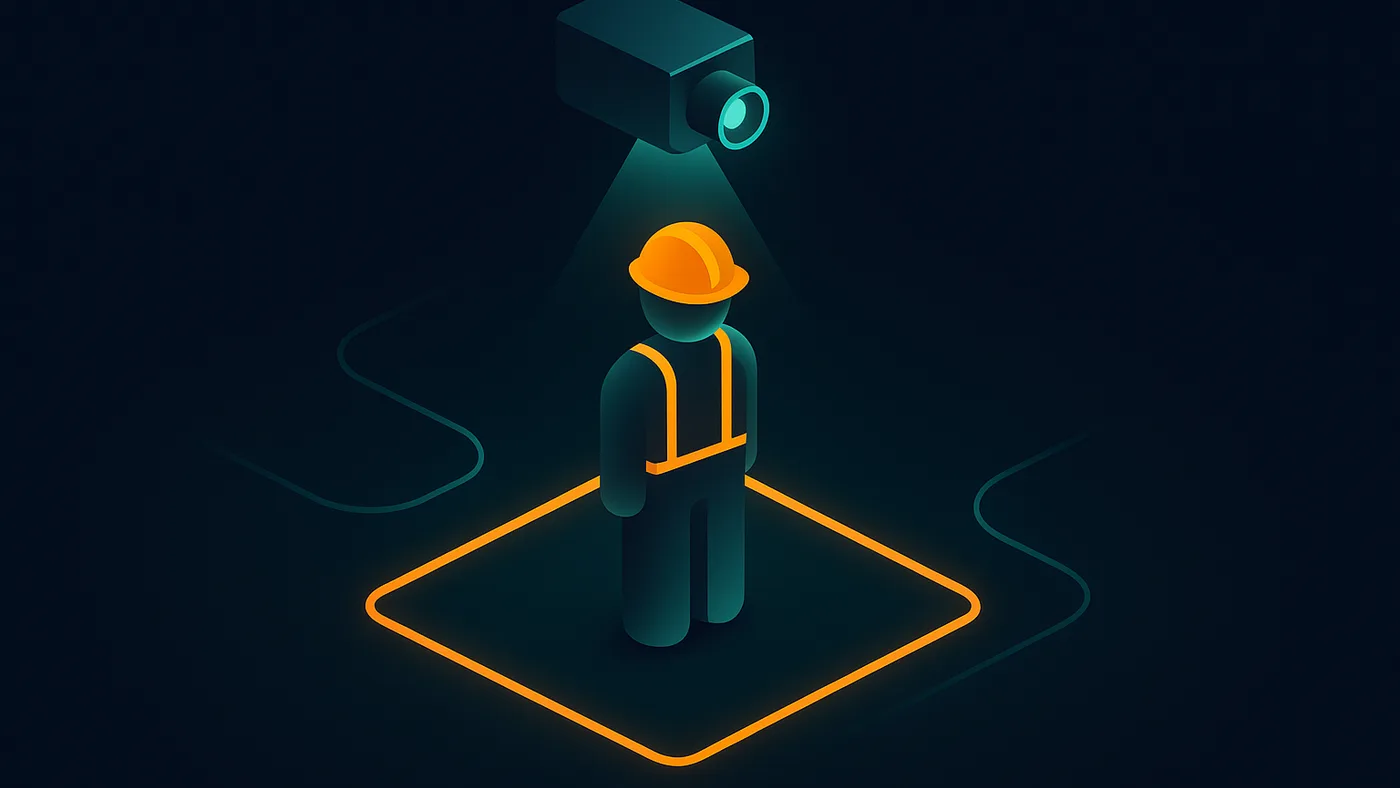
On a manufacturing floor, a safety camera watches for the moment a real hazard appears, not for a checklist. It tells an actual ignition source apart from the sparks a welding bay throws off every shift, catches missing protective gear at a zone entrance, and flags a person or vehicle where the perimeter says neither belongs. Every one of those checks gets tuned to this site’s own cameras and hazard patterns in a pilot before it goes live.
Where it applies on the floor
-
Telling a real fire from hot work. In a shop where welding and metal-cutting run through most of a shift, the heat and sparks from that work are normal, and a thermal camera alone can read the machinery’s own warmth as if it were a fire. The system is trained on that distinction, watching for an ignition source or a plume of smoke that doesn’t belong to the welding or cutting already happening nearby. When it sees one, it sends an alert with a clip straight to the people responsible for the area, not into a queue that waits for the next walkthrough. Catching a fire at the first sign of ignition, instead of after it has spread across a bay, is the difference the system is built to make.
-
PPE compliance with a defensible record. Elsewhere on the same site, hard hats, masks, or other required protective gear are a condition of entry into specific zones, and a missed piece of PPE is easy for a walkthrough to overlook until it becomes a habit. The same cameras work as a PPE detection system at those entry points, watching continuously and logging the moment someone crosses into a zone without the gear that zone requires, then notifying the responsible person as it happens rather than at the next scheduled check. That log becomes the record an audit or an incident review actually needs: a timestamped account of which zones were entered and in what gear, ready before anyone has to reconstruct the day from memory.
-
Guarded zones, perimeter, and a person down. A perimeter fence, a restricted yard, or a hazardous area is meant to stay empty of anyone who hasn’t been cleared to be there, and today that mostly depends on a guard noticing in time. The same cameras watch that boundary for a person, vehicle, or animal crossing into it, and separately for a person on the ground who hasn’t moved when they should have. Either event raises an alert with a clip of the moment, and on a site where the boundary ties into a gate, barrier, or alarm system, that alert can trigger an automatic response there too. What changes is when someone finds out: while the event is happening, rather than on the next scheduled walk past that stretch of fence.
-
Sanitary rules on a packing or food line. A packing or food line runs its own sanitary rules at every shift changeover: hands washed, the right protective gear on, staff staying inside the zones a hygiene plan assigns them to. When someone skips a step, such as crossing into a packing zone without the protective gear the hygiene plan calls for, the system records the event in a digital log built for audits and can flag it to the shift lead in real time. The shift lead can pull that entry the same day and fix the gap before the next changeover. Catching the lapse at the line, while the batch is still inside the plant, is a different position to be in than discovering it after a batch has already shipped.
The problem we solve
Manufacturing and construction sites rely on manual walkthroughs and after-the-fact incident reports to catch missing PPE, blocked emergency routes, or people in restricted or hazardous zones, so unsafe conditions can go unnoticed until an inspection or an incident, not while they are happening.
How we work
- Pilot scoping.Hazard classes such as a fire or smoke source, PPE types, and restricted zones — whichever this site needs watched — are agreed before any build starts, along with the control sample that validates detection against them.
- Pilot on your footage.Detection then runs against your own footage, checked against that sample under the pilot process set out on the AI video analytics page.
- Integration.Confirmed PPE, zone, and ignition events are wired into the systems this site already runs: an alert with a clip to the responsible person's messenger or dashboard, an entry in a digital incident log, and, where it fits the site's own setup, a signal into a connected gate or alarm system, confirmed before rollout.
- Rollout and support.Coverage expands to the remaining zones and hazard classes in scope once the pilot is signed off, with full documentation and a handoff for your team, and support that keeps going as PPE rules or zone boundaries shift.
What you bring / what you get
Inputs
- Footage covering the hazard areas and restricted zones in scope, or a way to connect into the CCTV you already run
- The safety events, zones, or PPE types you need monitored
- Where alerts should be routed — messenger, dashboard, or whatever channel your team watches
Outputs
- Detection of the agreed hazard classes, PPE rules and zones, confirmed on your own footage
- PPE and zone or behavior event detection connected to your alerting or dashboard systems
- A written handoff covering every hazard class, zone, and alert path included in the pilot
Definition of done.A safety monitoring pilot validated against this site's own event set — PPE types, restricted zones, and hazard classes such as an ignition source — and a control sample, tested against the acceptance thresholds agreed for the pilot, with confirmed events wired into your alerting or dashboard systems and into a digital incident log, documented for rollout.
Fit and anti-fit
Good fit
- Sites running hot work, restricted zones, or PPE rules with existing camera coverage to build a pilot on
- EHS teams that would rather see hazard detection proven on real events before scaling to the whole site
Not a fit
- Sites with no camera coverage in the areas that need watching, and no plan to add any
- A signed commitment to a specific detection rate ahead of any pilot work
Questions
- What does an AI safety monitoring system include?
- Detection that tells a real ignition source apart from ordinary welding and cutting heat, PPE compliance at zone entry points, unauthorized entry into a perimeter or restricted area, and sanitary-rule compliance on a packing or food line, each piloted against your own footage and an agreed event set before it's connected into your systems.
- How does it tell a real fire from welding or cutting sparks?
- Thermal cameras alone tend to read the heat from welding and metal-cutting as if it were a fire, so the model is taught the difference between that ordinary process heat and something starting to burn where nothing should be, and raises an alert for the ignition source rather than for routine hot work.
- Who gets told, and what else happens, when the system confirms a hazard?
- An alert with a clip goes to the responsible person's messenger or dashboard and the event is logged. Where the site already has a gate, barrier, or alarm system connected, that response can follow on its own as well, and a genuinely uncertain result can be routed to a person for a decision.
- Can the same setup log sanitary or PPE compliance for an audit?
- Yes. Every PPE or sanitary-rule event the system confirms is written into a digital log with a timestamp, so an auditor gets a dated entry per event rather than a summary written after the fact.
- How is this priced?
- This site's hazard classes, PPE rules, and zones get scoped in a task review first, and the pilot itself is tested against the acceptance thresholds agreed at that stage. Full-site rollout across those zones and hazard classes, plus the monitoring support that follows, gets quoted once the pilot is confirmed.
Explore

Have a process, dataset, or camera footage to work from?